-
-
-
Mon - Thursday: 8:00 am - 5:00 pm
Friday : By Appointment Only (We are closed public holidays)
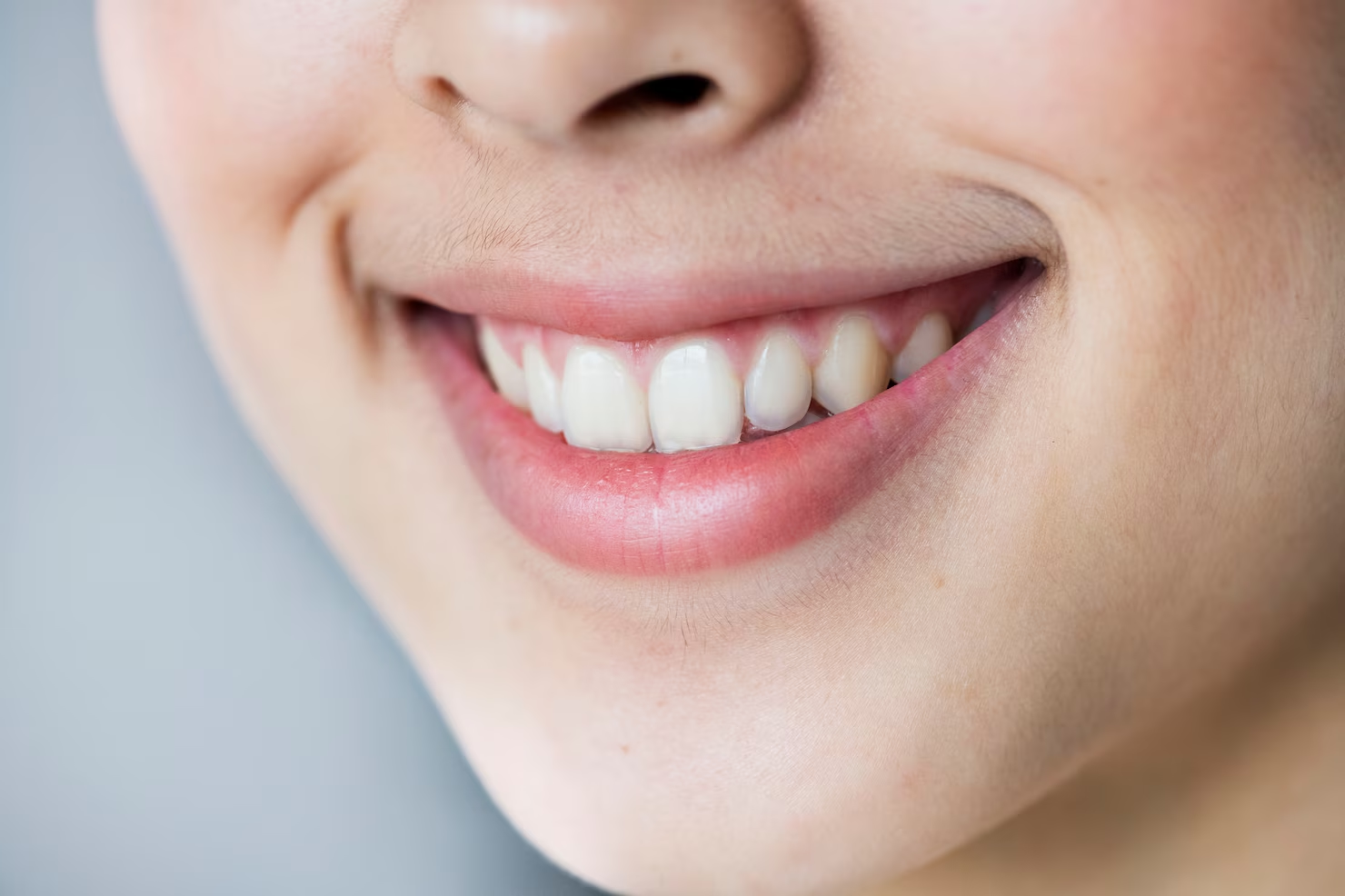
Teeth whitening is one of the most common cosmetic treatments people consider, often without much discussion. A box from the store, an online kit, or a quick appointment at a dental office can all promise brighter teeth. The differences between these options, however, are rarely obvious at first glance.
Before choosing between professional care and at-home products, it helps to understand how whitening works, what affects results, and where safety matters most. Teeth respond differently depending on enamel condition, prior dental work, and daily habits. That’s why teeth whitening is not as universal as advertising sometimes suggests.
How Teeth Whitening Works in General
The majority of whitening techniques are based on peroxide-containing substances, which go through the enamel layer and decompose the stains. The stains can be caused by coffee, tea, tobacco, wine, or even just aging. Whitening does not take away enamel; it changes the hue of what is already present.
The efficacy of this method is determined by:
- The degree of staining
- The thickness of enamel
- Presence of restorations
- Sensitivities
These factors explain the differences in results observed among individuals.
Professional Teeth Whitening in a Dental Setting
Professional whitening is performed under supervision as part of cosmetic dentistry services. The process is controlled, monitored, and adjusted based on patient response.
Dentists evaluate:
- Tooth and gum health
- Existing fillings or crowns
- Sensitivity history
This evaluation matters. Whitening agents are strong, and applying them without understanding the underlying dental condition can cause discomfort or uneven results.
Professional whitening often produces noticeable changes in a shorter time frame. That doesn’t mean it is risk-free, but it is structured to reduce avoidable issues.
At-Home Whitening Kits and Over-the-Counter Products
The at-home kits are effortless to get and use. The products vary from bleaching strips, trays, and LED light systems. Accessibility and low upfront cost are the main reasons why so many people opt for them.
Nevertheless, these kits act the same way for everybody regardless of individual situations. They take for granted a common enamel response that does not always apply. This explains the potential gum irritation or sensitivity, as well as the uneven whitening that occurs.
Home-care products may be effective in the case of minor surface staining, but they are not meant to treat deep discoloration and complicated dental conditions.
Comparing Results Without Oversimplifying
The difference between professional whitening and at-home kits is not just strength. It’s predictability.
Professional treatment tends to offer:
- More consistent shade changes
- Reduced risk of patchiness
- Better management of sensitivity
At-home kits offer:
- Convenience
- Gradual changes
- Less oversight
Neither option is automatically “better.” The choice depends on dental history, expectations, and tolerance.
Safety Considerations Often Overlooked
Whitening is sometimes regarded as a risk-free treatment, but complications occur when the process is done too many times or when it is applied to already damaged teeth. Common problems that arise are:
- Temporary sensitivity
- Gum irritation
- Uneven whitening
Crowns, veneers, and fillings won’t change color. If whitening is done in the visible smile zone, this can certainly lead to mismatched color. That’s why whitening is frequently mentioned in the context of cosmetic dentistry, where it is considered a product choice instead of a standalone procedure.
When Aesthetic Dentistry Plays a Role
Whitening is not a miracle treatment that solves every cosmetic problem. Whitening may not work at all or very little for dark, traumatic, and medicated or aged teeth discolored from the inside out.
Such situations may lead to aesthetic dentistry for different treatments that are less invasive and at the same time yield a pleasing aesthetic result. The removal of darkened enamel can still be a procedure for the treatment, but it may not necessarily be the last one done.
FAQs
Is professional teeth whitening safer than at-home kits?
Professional whitening allows for evaluation and monitoring, which can reduce certain risks.
Can whitening damage enamel?
When used correctly, whitening does not remove enamel, but misuse can increase sensitivity.
How long do whitening results last?
Results vary depending on diet, habits, and oral hygiene.
Should whitening be done before other cosmetic dental work?
Often, yes, but this depends on the treatment plan.
Conclusion
Tooth bleaching is a matter of personal choice, influenced by the individual’s comfort level, the expected result, and the dental condition. Both methods, being professional treatment and at-home kits, have their benefits but are not the same. Knowing the distinctions helps in preventing frustration and experiencing discomfort that is not necessary.
When the treatment is thought of as a step in the comprehensive cosmetic dentistry services, it turns out to be more predictable and safer. Patients considering teeth whitening along with other cosmetic dental procedures should rely on the expertise of highly trained dental professionals to ensure results that align with their desired appearance and long-term oral health.