-
-
-
Mon - Thursday: 8:00 am - 5:00 pm
Friday : By Appointment Only (We are closed public holidays)
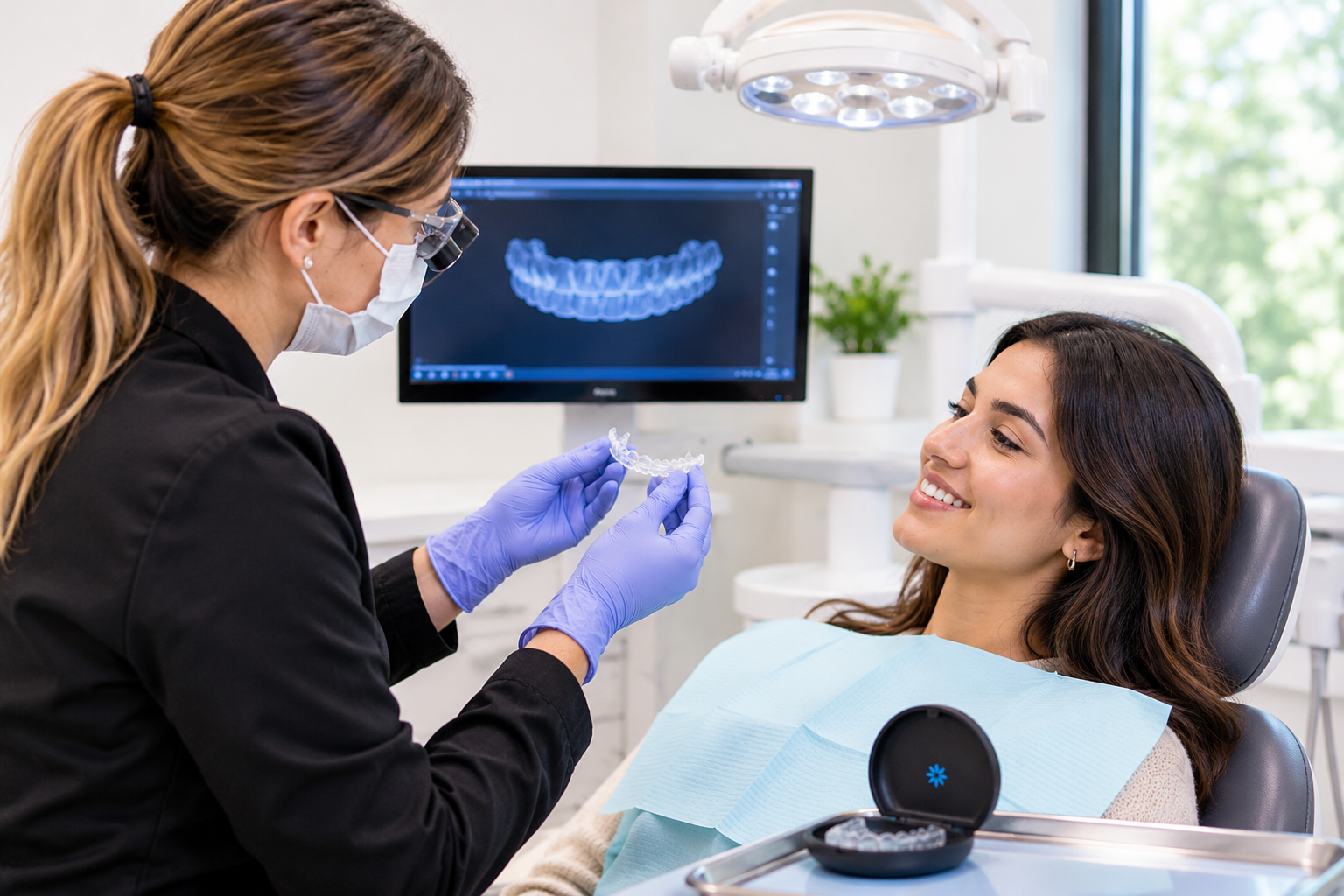
The Invisalign treatment process uses clear, removable trays to gradually move teeth into planned positions. The treatment begins with a dental exam and a plan based on each patient’s smile. Custom aligners are then made to guide tooth movement over time. Regular dental visits help track progress and keep treatment on course.
At Amesbury Dental Associates, patients can learn about the steps involved in Invisalign treatment before deciding whether clear aligners are the right choice. Understanding the process can make it easier to prepare for treatment and follow the daily care routine.
Key Takeaways
- Treatment begins with a dental exam and a personalized plan.
- Digital scans help create custom aligner trays.
- Aligners need to be worn for the recommended hours each day.
- Regular dental visits help track tooth movement.
- Retainers help keep teeth in their new positions after treatment.
What Happens During the Invisalign Treatment Process?
The Invisalign treatment process includes several stages, from the first consultation to the final retainer. Each stage helps guide tooth movement and supports a healthy smile. The exact steps can vary based on the condition of the teeth and the amount of movement needed.
Step 1: Schedule an Invisalign Consultation
The first step is an Invisalign consultation. During this visit, a dentist examines the teeth and gums, reviews dental health, and discusses smile goals. The consultation also provides an opportunity to ask about treatment time, cost, and daily care.
The treating dental professional may check for tooth decay, gum disease, or other concerns that need attention before treatment begins. Once dental health has been reviewed, the next steps can be planned.
Step 2: Complete a Dental Exam and Digital Scan
A dental exam helps determine whether clear aligners are suitable for the teeth and bite. A dentist may take photographs, X-rays, or other records when needed.
A digital dental scan creates a detailed 3D image of the teeth. This image helps the dentist plan tooth movement and design custom aligners. The scan also helps show how the teeth may change during treatment.
Step 3: Review the Treatment Plan
The digital scan helps create a treatment plan that outlines the expected movement of the teeth. The plan may include a digital preview of the expected result and an estimated treatment timeline.
A dentist reviews the plan and explains the steps involved. Treatment time depends on the amount of movement needed and how the teeth respond. The plan may be adjusted during treatment if the teeth do not move as expected.
Step 4: Receive Custom Aligner Trays
Once the treatment plan is approved, custom aligner trays are made. Each tray is shaped to fit the teeth and guide them toward the next stage of movement.
At the fitting appointment, the dentist checks the trays and explains how to insert and remove them. Instructions for cleaning, storage, and changing trays are also provided. Following these instructions helps support a smooth treatment process.
How to Wear and Care for Invisalign Aligners
Daily care plays an important role in treatment. Aligners need to fit properly and remain in place for the recommended number of hours. Good oral hygiene also helps protect the teeth and gums throughout treatment.
Step 5: Wear Clear Aligners Every Day
Many Invisalign treatment plans call for wearing aligners 20 to 22 hours a day, unless the treating provider gives different instructions. The trays are usually removed for meals, brushing, and flossing
A few simple habits can help keep treatment on track:
- Wear the trays for the recommended number of hours each day.
- Remove the trays before eating or drinking anything other than water.
- Store the trays in a clean case when not in use.
- Follow the dentist’s instructions for cleaning and changing trays.
Some pressure or mild soreness may occur when starting a new set of aligners. This can happen as the teeth begin adjusting to the new tray. Strong pain or trays that do not fit properly should be reported to the dentist.
Step 6: Change Aligner Trays as Directed
Each set of trays is designed to move the teeth a small amount. After the planned number of days, the next set is used to continue the process.
The timing for changing trays depends on the treatment plan. Skipping sets or changing them too early may affect how well the trays fit. A dentist should be contacted if a tray is lost, damaged, or does not fit properly.
Step 7: Keep Teeth and Trays Clean
Good oral hygiene helps reduce the risk of tooth decay and gum problems during treatment. Food and plaque can collect around the teeth if proper cleaning is not maintained.
Teeth should be brushed twice a day and flossed daily. Aligners should be cleaned according to the dentist’s instructions. Hot water should be avoided because it may change the shape of the trays.
What Happens During Invisalign Appointments?
Regular visits allow the dentist to check tooth movement and make sure the aligners fit properly. These visits also help identify problems early and keep treatment moving in the right direction.
Step 8: Attend Follow-Up Visits
Invisalign appointments are scheduled throughout treatment to check progress. During these visits, the dentist may examine the teeth, review the bite, and check how well the trays fit.
The frequency of visits depends on the treatment plan. Additional aligners may be provided during these appointments. Regular checkups are important even when the teeth appear to be moving as expected.
Step 9: Make Adjustments When Needed
Sometimes, teeth do not move exactly as planned. A dentist may recommend changes to the treatment plan or additional aligners to help guide the teeth into the desired positions.
Small tooth-colored attachments may also be used to help certain teeth move. These changes depend on the needs of each case and may affect the overall treatment time.
How Long Does Invisalign Treatment Take?
Treatment time varies based on the amount of tooth movement needed and how well the aligners are worn. Some cases may take only a few months, while others may take a year or longer.
Wearing aligners for the recommended hours each day can help prevent delays. Missed wear time may slow progress and affect the treatment timeline. Regular dental visits help track movement and identify any changes that may be needed.
What Happens After Invisalign Treatment?
Once the teeth reach their planned positions, the dentist checks the bite and overall result. Additional aligners may be needed if further movement is required. After active treatment is complete, retainers help keep the teeth in place.
Step 10: Wear Retainers to Maintain the Results
Teeth can shift after treatment, even when the desired positions have been reached. Retainers help hold the teeth in place while the surrounding tissues adjust.
The treating provider will explain which type of retainer is suitable and how often it should be worn. Some patients may need full-time wear at first, followed by nighttime wear. The exact schedule depends on the treatment plan.
Step 11: Continue Regular Dental Checkups
Dental visits remain important after treatment. Regular checkups help protect the teeth and gums and allow the dentist to check whether the bite remains stable.
Brushing, flossing, and wearing retainers as directed can help maintain the results. Any changes in the bite or signs of shifting teeth should be reported to the dentist.
Is Invisalign Right for Every Smile?
Clear aligners can be a suitable choice for many patients who want to improve the appearance and alignment of their teeth. However, not every dental concern can be treated with aligners alone.
A dental exam helps determine whether Invisalign is a good fit. The dentist will consider the condition of the teeth, the bite, and the amount of movement needed. Other treatment options may be recommended when clear aligners are not suitable.
Conclusion
The Invisalign treatment process includes a dental exam, digital planning, custom aligners, regular checkups, and retainer care. Each stage helps guide tooth movement and supports a healthy smile. Following the treatment plan, wearing aligners as directed, and maintaining good oral hygiene can help keep treatment on track. Retainers are also important for maintaining the results after active treatment ends. For more information about Invisalign treatment, contact Amesbury Dental Associates to schedule a consultation and discuss available treatment options.
Frequently Asked Questions
Can Invisalign aligners affect speech?
Some patients may notice a slight change in speech when first wearing aligners. This usually improves as the mouth adjusts. Reading aloud and speaking regularly can help make the adjustment easier.
Can Invisalign aligners be worn while sleeping?
Yes. Aligners are designed to be worn during sleep as part of the daily wear schedule. Keeping them in place overnight helps maintain consistent tooth movement.
What happens if an Invisalign tray is lost or damaged?
A dentist should be contacted for advice. Depending on the treatment stage, the dentist may recommend using the previous tray, moving to the next tray, or getting a replacement. A damaged tray should not be worn if it causes pain or does not fit properly.
Can Invisalign treatment be started with dental fillings or crowns?
Invisalign may still be an option for patients with fillings or crowns. A dentist will examine the teeth and existing dental work before recommending treatment. Some cases may need special care to help the aligners fit and work properly.
What should be done if an Invisalign tray feels too tight?
Mild pressure when starting a new tray can be normal. However, a tray that does not fit properly or causes strong pain should be checked by a dentist. Following the recommended tray-changing schedule can help prevent fitting problems.