-
-
-
Mon - Thursday: 8:00 am - 5:00 pm
Friday : By Appointment Only (We are closed public holidays)
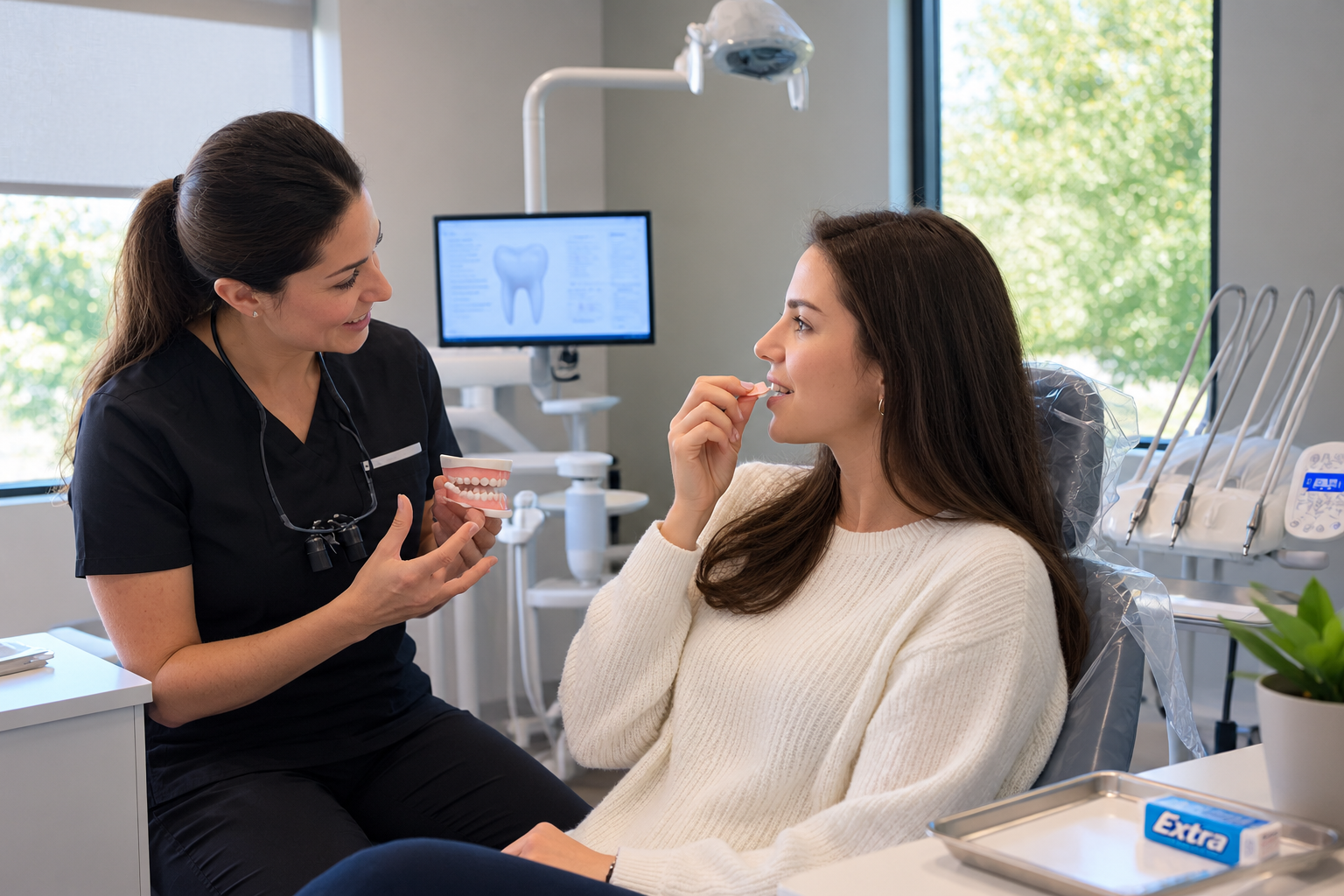
Does chewing gum clean teeth? It can help support your oral health, but it cannot replace brushing, flossing, or professional dental cleanings. For patients looking for simple ways to care for their smiles between visits, At Amesbury Dental Associates, we emphasize prevention, patient education, regular cleanings, and good home-care habits. Amesbury Dental Associates focuses on prevention, patient education, regular cleanings, and good home care as part of long-term oral health.
Key Takeaways
Chewing gum can be useful, especially when you choose the right type and use it at the right time. It mainly works by increasing saliva flow, which helps clear food and reduce acids in the mouth. However, gum does not scrub away plaque the way brushing and cleaning between your teeth do.
- Choose sugar-free gum instead of gum with added sugar.
- Chewing after meals may increase saliva and help clear acids.
- Xylitol gum can be a useful option for some patients.
- Gum should support, not replace, regular oral hygiene.
- Regular dental exams and cleanings are still important.
Does Chewing Gum Clean Teeth?
The simple answer is no, not in the same way brushing cleans your teeth. Chewing gum does not remove plaque from every tooth surface or clean between your teeth. However, it can offer some helpful effects that support a healthy mouth. When you chew gum, your mouth produces more saliva. Saliva helps wash away food particles and dilute acids produced by bacteria. This can create a better environment for your teeth after eating.
What Does Gum Actually Do?
Think of chewing gum as an extra tool rather than a replacement for your normal routine. It may help your mouth recover after eating, especially when brushing is not possible right away.
Its main benefits include:
- Increasing saliva flow
- Helping clear food particles
- Reducing plaque acids
- Supporting enamel protection
- Helping neutralize acids in the mouth
These effects explain why chewing gum can be helpful, even though it does not physically clean every surface of your teeth.
Why Sugar-Free Gum Is the Better Choice
If you want gum to support your oral health, sugar-free gum is the better option. Regular sugary gum can give oral bacteria another source of fermentable sugar. Those bacteria can produce acids that contribute to tooth decay. Sugar-free gum uses other sweeteners instead of regular sugar. Some products contain xylitol, sorbitol, or other sugar substitutes. These ingredients do not provide the same fuel for cavity-causing bacteria as ordinary sugars.
The ADA Seal of Acceptance is awarded to qualifying products that meet the ADA’s requirements. If you mention a specific gum or its benefits,confirm that the product currently carries the Seal andlink to the relevant ADA information.
Can Xylitol Gum Help Prevent Cavities?
Xylitol gum is often discussed because xylitol is a sugar alcohol that oral bacteria do not use in the same way they use regular sugar. Some research suggests that xylitol-containing gum may help lower certain cavity-related bacteria.
Still, it is important not to treat xylitol as a magic ingredient. Evidence about its specific cavity-prevention effect is mixed, and the ADA notes that xylitol can be useful as part of a broader prevention routine rather than as a replacement for standard care.
Is Chewing Gum After Meals Good for Your Teeth?
For many people, chewing gum after meals can be a useful habit. Eating can leave food particles and acids in your mouth. Chewing sugar-free gum stimulates saliva, which helps your mouth clear and neutralize some of those acids. The ADA notes that chewing sugar-free gum for about 20 minutes after eating can increase saliva flow and Avoid presenting gum as a substitute for brushing, flossing, fluoride, or professional dental care..
This can be especially useful when you are away from home and cannot brush immediately. Keep a pack of sugar-free gum in your bag, car, or desk for those situations.
When Should You Chew Gum?
There is no need to chew gum all day. A short period after eating may be enough to gain its oral health benefits.
Consider chewing sugar-free gum:
- After a meal
- After a snack
- When brushing is not convenient
- When your mouth feels dry
If chewing gum causes jaw discomfort, headaches, or other problems, stop using it and talk with your dentist.
Can Chewing Gum Remove Plaque?
Chewing gum should not be considered a form of plaque removal. Plaque is a sticky film of bacteria that develops on the teeth. It can build up around the gumline and between teeth, where chewing gum cannot reach effectively.
Brushing with fluoride toothpaste and cleaning between the teeth remain the main ways to physically remove plaque at home. Professional cleanings also help remove deposits that regular brushing cannot fully address. Amesbury Dental Associates recommends preventive care that combines home oral hygiene with regular dental exams and professional cleanings.
Why Plaque Control Matters
Plaque that remains on the teeth can contribute to cavities and gum problems. That is why a good routine matters more than any single oral health product.
A simple daily routine includes:
- Brush twice a day with fluoride toothpaste.
- Clean between your teeth every day.
- Limit frequent sugary snacks and drinks.
- Attend regular dental exams and cleanings.
Gum can fit into this routine, but it should never take the place of these basic steps.
How Saliva Helps Protect Your Teeth
One of the biggest reasons gum can benefit your mouth is saliva production. Saliva does much more than keep your mouth moist. It helps wash away food, buffer acids, and provide minerals that support the teeth.
Chewing stimulates saliva because of both the physical action of chewing and the taste of the gum. Increased saliva can help dilute acids made by bacteria after you eat. Sugar-free gum may provide temporary relief for some people with occasional dry mouth by stimulating saliva. Persistent dry mouth should be discussed with a dental professional because it can increase the risk of tooth decay and other oral problems.
Does Gum Help With Cavity Prevention?
Yes, sugar-free gum may play a role in cavity prevention, but the benefit comes from more than simply chewing something. Increased saliva flow can help reduce the amount of acid around your teeth after eating.
Some sugar-free gums have also been evaluated for cavity-related benefits. The ADA Seal of Acceptance includes sugar-free chewing gums that meet its safety and efficacy requirements. However, gum cannot repair an existing cavity. If you already have tooth decay, delaying treatment because you chew gum could allow the problem to become more serious.
Can Gum Improve Oral Hygiene?
Gum can support oral hygiene, but it is only one small part of a complete routine. A healthy smile depends on consistent habits rather than one quick solution. It is helpful to think of gum as something you can add between meals. It can make your mouth feel fresher and increase saliva, but it cannot replace a toothbrush or floss.
For example, if you finish lunch at work and cannot brush right away, sugar-free gum may be a practical temporary step. Later, you should still follow your normal brushing and cleaning routine.
What About Gum and Healthy Gums?
Sugar-free gum may support a cleaner oral environment by increasing saliva and reducing plaque acids, but it is not a treatment for gum disease. Healthy gums depend on good plaque control, regular dental care, and early attention to changes such as swelling, bleeding, tenderness, or persistent bad breath.
If your gums bleed regularly when brushing or flossing, do not assume that gum can solve the problem. It is better to discuss the symptoms with a dental professional so the cause can be checked.
When Chewing Gum May Not Be the Best Choice
Although sugar-free gum is generally useful for many people, it is not ideal for everyone. Some patients may have jaw pain or a condition that makes repeated chewing uncomfortable. Sticky or sugary gum is also a poor choice for people trying to reduce their risk of tooth decay. In addition, some sugar alcohols can cause digestive discomfort when consumed in large amounts.
The best approach is simple: choose sugar-free gum, chew it in moderation, and pay attention to how your mouth and jaw feel. If you notice Gums Inflamed After Flossing, persistent bleeding, swelling, or pain, do not rely on gum as a solution. These symptoms may need professional evaluation.
Gum Cannot Replace Dental Treatment
Chewing gum is useful for prevention, but it cannot fix damaged or missing tooth structure. If a tooth has a cavity, crack, infection, or significant damage, professional treatment may be needed. A dental examination can help identify the cause of the problem and determine whether treatment is necessary. Depending on the condition of the tooth, options may include fillings, crowns, bridges, or implants.
Amesbury Dental Associates provides tooth restoration services designed to restore the shape, function, and appearance of damaged teeth.
A Simple Way to Think About Chewing Gum
The easiest way to understand gum is to see it as a helpful addition to your oral care routine. It can support your mouth between meals, but it cannot do everything your toothbrush, floss, and dentist can do. If you chew sugar-free gum after eating, you may increase saliva flow and help your mouth clear acids. That is useful, but it is only one part of protecting your teeth. Your long-term routine should still include regular brushing, daily cleaning between your teeth, a balanced diet, and professional dental visits.
Final Thoughts
So, does chewing gum clean teeth? Not exactly. It does not brush away plaque or replace professional cleaning. However, sugar-free gum can support oral health by increasing saliva, helping clear food and acids, and potentially lowering cavity risk when used as part of a complete routine.
The goal is not to find one habit that does everything. Good oral health comes from small habits that work together. Choosing sugar-free gum is one simple step that can complement brushing, flossing, and regular dental care. If you have questions about your oral health or need personalized preventive care, contact Amesbury Dental Associates to schedule an appointment.
Frequently Asked Questions
Does gum freshen your breath?
Yes, especially sugar-free gum, as it increases saliva and can help reduce food particles and odors.
Can children chew sugar-free gum?
Some children can safely chew sugar-free gum but it should only be offered when a child is developmentally able to chew and spit it out without swallowing or choking. Ask your child’s dentist if you are unsure.
Is gum safe for dental fillings?
Generally, sugar-free gum is safe, but patients with certain dental work should follow their dentist’s advice.
Can gum help with dry mouth?
Chewing sugar-free gum can stimulate saliva and may provide temporary relief from dry mouth.
Should I chew gum before or after brushing?
Gum is most useful after meals or snacks, while brushing remains essential for daily plaque control.