-
-
-
Mon - Thursday: 8:00 am - 5:00 pm
Friday : By Appointment Only (We are closed public holidays)
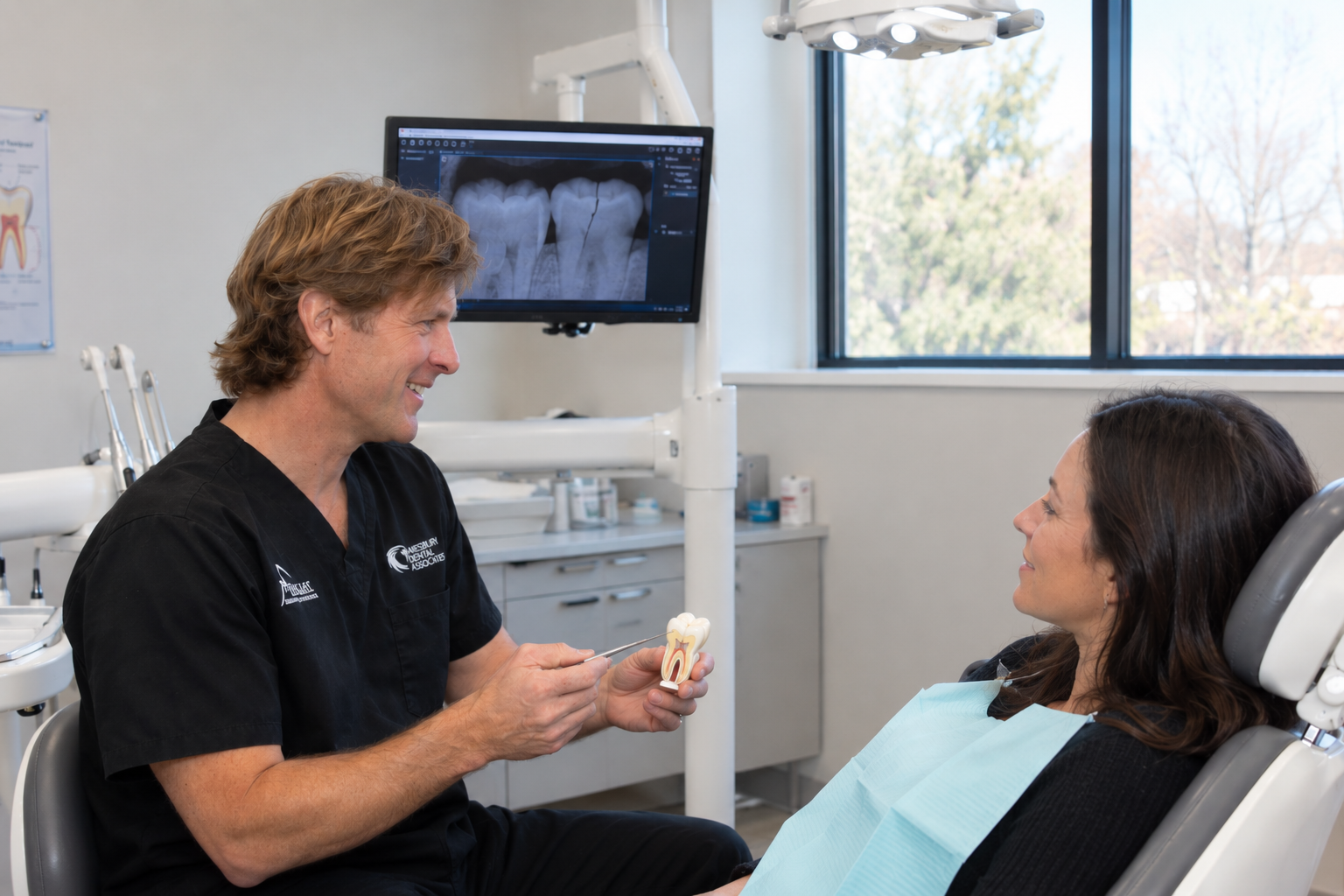
A crack tooth can turn a normal meal into a painful experience. You may feel a sharp twinge when you bite, sensitivity to cold drinks, or pain that seems to appear and disappear. At Amesbury Dental Associates, we know damaged teeth can cause worry. Early dental care can often prevent a small fracture from becoming a bigger problem.
Key Takeaways
A cracked tooth does not always hurt all day. Some cracks are tiny, while others reach deeper parts of the tooth and need prompt care. Paying attention to changes in your bite, sensitivity, and gum health can help you act sooner. A dental exam can identify the cause and guide treatment.
- Pain when biting or releasing a bite can be a warning sign.
- Hot, cold, or sweet foods may trigger sensitivity.
- Treatment depends on the crack’s size, depth, and location.
- A damaged tooth should be checked rather than tested repeatedly at home.
- Early care may give you more options for saving the natural tooth.
What Is a Crack Tooth?
A crack tooth is a tooth with a split or fracture in its structure. The damage may affect only the outer enamel, or it may extend toward the inner pulp, where nerves and blood vessels are found. A crack can spread when you keep chewing on it. A dentist can examine the tooth and decide whether it needs monitoring, repair, or more involved treatment.
What Are the Signs of a Cracked Tooth?
Signs of a cracked tooth are not always easy to recognize. Pain may happen only while eating and then disappear. You may notice sensitivity, a rough edge, or gum tenderness. Some fractures cannot be seen in a mirror. If one tooth keeps causing the same sensation, do not ignore it because discomfort is not constant.
Pain When Chewing
Pain linked to chewing is one of the most common warning signs. Some people feel pain when they bite down, while others feel it when they release the bite. This can happen when pressure causes the cracked parts of the tooth to move slightly. Try not to keep biting on the tooth to test it, because repeated pressure may make the damage worse.
Temperature Sensitivity
A damaged tooth may react to cold water, ice cream, hot coffee, or other temperature changes. A crack can let irritants move closer to the sensitive inner layers of the tooth. You may also notice a white spot on tooth when looking closely at your smile. However, a white spot is not usually a direct sign of a crack and can have other causes, such as changes in the enamel. If sensitivity keeps returning or pain lingers after eating or drinking, schedule a dental examination.
Swelling and Tenderness
A deeper fracture can allow bacteria to reach areas that should remain protected. This may lead to gum tenderness, swelling, bad taste, or worsening pain. Fever or facial swelling can be a sign of infection and needs prompt attention. If swelling is spreading or you have trouble breathing or swallowing, seek emergency medical care rather than waiting for a routine dental visit.
Why Do Teeth Crack?
Teeth can fracture for many reasons. A tooth with a large filling may have less natural structure to support it. Grinding, clenching, injuries, and years of chewing can add stress. Even a strong tooth can crack after biting something very hard. Knowing the cause can help reduce future damage.
Common causes include:
- Biting ice, hard candy, or other very hard foods.
- Teeth grinding or clenching during sleep.
- A fall, sports injury, or blow to the mouth.
- Large fillings that leave less natural tooth structure.
- Normal wear that makes teeth more vulnerable over time.
What Are the Best Cracked Tooth Repair Options?
The best form of cracked tooth repair depends on how much healthy tooth remains and whether the inner nerve is affected. A small chip may need only a simple restoration, while a deeper fracture may need protection or root canal treatment. If the tooth cannot be saved, removal may be considered. The goal is to control pain, stop further damage, and keep your mouth healthy.
Dental Bonding
Bonding can repair small chips and minor surface damage. A tooth-colored material is placed on the affected area, shaped, and polished to blend with the tooth. It is often a simple option for cosmetic damage. However, bonding may not be strong enough for a deep fracture or a back tooth that takes heavy chewing pressure. Your dentist can tell you if it is suitable.
Dental Crown
A dental crown covers and protects a weakened tooth. It may be recommended when a tooth has lost a large amount of structure but still has enough healthy material to support a restoration. A crown helps spread chewing forces over the tooth and can reduce stress on the remaining structure. It is commonly considered after other needed treatment has been completed.
Root Canal Treatment
If a crack reaches the pulp, the inner tissue can become inflamed or infected. Root canal treatment removes the damaged pulp, cleans the inside of the tooth, and seals it. A crown or another strong restoration may then be used to protect the tooth. Root canal care is not needed for every fracture, so your dentist must first determine whether the nerve is involved.
Tooth Removal
When a fracture extends deep below the gum or divides the tooth, saving it may not be possible. Removal can prevent ongoing pain and reduce the risk of infection. After healing, your dentist can discuss ways to replace the missing tooth, such as an implant, bridge, or partial denture. The choice depends on your oral health and treatment needs.
What About a Chipped or Broken Tooth?
A chipped tooth is not always the same as a deep fracture. A small chip may affect only the enamel and can often be smoothed or repaired with bonding. A larger break can expose deeper layers and need stronger protection. Broken tooth treatment should be based on the depth and location of the damage, not only on how large the missing piece looks. If you find a broken piece, keep it clean and bring it to your appointment when possible. Do not glue it back yourself.
When Should You See an Emergency Dentist?
Some dental injuries need urgent care. Severe pain, facial swelling, uncontrolled bleeding, or a badly damaged tooth should not wait. If you are unsure whether symptoms are urgent, call a dental office and explain what happened. A dental professional can help you decide how quickly you need to be seen.
Seek urgent dental care for:
- Severe or increasing tooth pain.
- Facial or gum swelling.
- A major fracture or very loose tooth.
- Fever, pus, or a persistent bad taste.
- A tooth injury caused by a fall, accident, or direct blow.
How Can You Prevent a Cracked Tooth?
You cannot prevent every fracture, but you can reduce stress on your teeth. Avoid using teeth to open packages or bite objects. If you grind or clench, ask your dentist whether a custom night guard could help. Regular dental visits can find worn fillings or weak areas before they lead to a larger break. Small daily habits can protect your smile.
Try to:
- Avoid chewing ice and very hard foods.
- Wear a mouthguard during contact sports.
- Keep regular dental appointments.
- Do not use teeth as tools.
- Choose gentle brushing instead of brushing hard, which can wear tooth surfaces and irritate gums.
What Should You Do Before Your Appointment?
If you think a tooth is cracked, protect it until it can be examined. Eat softer foods and chew on the opposite side. Keep your mouth clean with gentle brushing. Avoid foods or drinks that trigger pain. Do not place aspirin directly on the tooth or gum because it can irritate the tissue. Do not delay care just because symptoms improve.
If you use orthodontic treatment such as invisalign aligners, tell your dental provider about the damaged tooth before making changes to your routine. The provider can advise you on the safest next step.
Why Professional Treatment Matters
Every fracture is different, so treatment must match the tooth. A surface line may need no repair, while a deeper crack may require a crown, root canal treatment, or removal. Trying to repair the tooth yourself can delay care. Professional evaluation gives you a clearer answer and helps prevent complications.
Conclusion
A crack tooth should not be ignored just because the pain comes and goes. Early evaluation can identify the problem while treatment choices may still be available. Whether you need bonding, a dental crown, root canal treatment, or another form of broken tooth treatment, the right option depends on the crack and the health of the tooth. Taking action early can help protect your comfort and natural smile.
If you have tooth pain, sensitivity, or a damaged tooth, contact Amesbury Dental Associates today to schedule an appointment and discuss the best next step for your smile.
Frequently Asked Questions
Can a cracked tooth heal on its own?
No. A crack in a tooth does not naturally heal like a broken bone, so dental evaluation is important.
Is a cracked tooth always visible?
No. Some cracks are very fine and may not be noticeable without a professional dental examination.
Can I eat normally with a cracked tooth?
It is better to avoid hard or chewy foods and use the opposite side of your mouth until the tooth is checked.
Can a cracked tooth cause headaches?
It can. Tooth-related discomfort may sometimes contribute to jaw tension or pain that feels like a headache.
How long can I wait to treat a cracked tooth?
It is best not to delay an evaluation. Cracks can become more extensive with continued chewing and pressure.